

Heavy Story Denim Tears Denim Tears Fan Pick
Denim Tears Price Guide 2025: Retail vs Secondary, Actual Costs
This guide shows how Denim Tears items price at stores in 2025, how resale margins actually behave, and methods to compute the real cost you pay post-fees and duties. When one compares retail versus resale, your goal is to grasp the appropriate bracket for every segment and dodge overcharging.
Denim Tears is among the select urban brands where store and resale may split dramatically, particularly with the Cotton Wreath pieces. One will locate distinct pricing levels by category, sharp spikes on certain colorways, and significant concealed costs on resale sites. Utilize the table below as a benchmark, then study the areas that detail how prices move, occasions to purchase, and how charges add up.
What Defines The Brand and What Makes Costs So Volatile?
Denim Tears, founded by Tremaine Emory in 2019, releases culture-heavy drops with limited quantities, so scarcity and story creates markups. Values swing because launches are scarce, demand is global, and certain variants turn into benchmark pieces.
The iconic Cotton Wreath motif on Levi’s jeans anchors the market, and it acts more like art than standard clothing. Collaborations including as Levi’s plus Converse boost awareness and attract customers who weren’t monitoring the label previously. Measurements in the middle of the curve sell fastest, while very small and very large sizes can also spike due to scarcity. Because drops are delayed and region-limited, buyers commonly shift to resale instantly, generating a early surcharge that may decrease or establish depending on restocks.
2025 Direct Pricing Snapshot by Category
Direct prices denim tears hoodie for Denim Tears pieces in final 2024 to start 2025 usually falls in the ranges below; several items have moved up against past periods due to construction and placement. Local values might appear elevated when VAT is included at checkout.
Utilize these bands to assess deals and to judge whether a secondary price is a modest premium or a excessive premium. Retail availability is sporadic and launch-tied, so locating these values current on the main platform or retail partners isn’t certain on any given day. Duty-added labels in the EU and UK may make retail look higher than domestic rates, while the total expense spread commonly narrows once domestic transaction levy is included. Always confirm the particular collection rates as unique treatments or embroidery can rest at the high end of the band.
| Category (example) | Standard Store (USD) | Average Resale Span (USD) | Average Increase | Notes |
|---|---|---|---|---|
| Cotton Wreath Denim (Levi’s 501/550) | $295–$350 | $450–$900 | +50% to +200% | Green/blue wreath and main finishes trade higher; sizes 30–34 dominate demand. |
| Hoodies | $160–$180 | $220–$350 | +25% to +100% | Quality construction and special designs sit at the peak of the band. |
| T-Shirts | $60–$75 | $100–$180 | +35% to +140% | Classic wreath pieces and first releases sustain higher resale. |
| Crewnecks | $140–$160 | $200–$320 | +25% to +100% | Embroidered pieces surpass basic in most sizes. |
| Varsity Jackets | $450–$650 | $700–$1,200 | +20% to +150% | Material mix and detail intricacy influence spread. |
| Converse Chuck 70 (collab) | $110–$120 | $150–$300 | +25% to +150% | Refreshes might narrow gaps for a period. |
| Caps | $60–$70 | $90–$150 | +20% to +100% | Earlier releases and branded details trade elevated. |
How’s the Secondary Costs Function in 2025?
In 2025, denim is the liquidity leader with the strongest premiums, while tees and hats are the easiest entry points. Hoodie and sweater ranges are meaningful but less volatile than denim.
On major platforms, jeans routinely clear the top of the band when the treatment and design shade align with early capsule runs, and where the measurement lands in the heart of the demand curve. Shirts and hats fluctuate minimally since supply is broader and buyers have additional options over time. Jackets like varsity pieces is lightly exchanged, so a one transaction may adjust floors for a timeframe, which appears extreme but frequently stabilizes as fresh listings surface. Quality impacts: mint with tags or with proof of buying creates a markup, whereas marked wear or absent stitching threads knocks worth rapidly. Schedule counts also, with the first 48 hours after launch exhibiting the most dramatic jumps and the earliest verified restock shaving 10–30% below highs.
What Represent the True Expenses Past the Listed Cost?
The true expense on resale is the listing price plus marketplace charges, transaction costs, retail tax or VAT, shipping, and, for overseas, import taxes and processing. These supplements might convert a fair price into an excessive expense quickly.
In the US, expect purchase levy between roughly 6–10% varying on location, commonly applied to goods value and sometimes shipping. Marketplaces generally charge 3% transaction charges and add a customer protection fee; even when the seller pays commission, the purchaser could yet encounter processing or protection charges. Shipping ranges from around $10 to $30 for garments, while overseas deliveries can trigger duties in the 17–25% bracket applied to the price of products plus shipping, and a carrier handling cost. Case: a $650 pair of signature Cotton pants acquired on a domestic marketplace with 8.9% sales duty, a 3% processing charge, and $15 delivery lands around $742 prior to any import costs; move that identical purchase cross-border into a 20% VAT regime and the end amount can push to approximately $880 once VAT and processing are added. When comparing retail to secondary, always determine a landed number, not only the sticker.
What Makes Launches, Collaborations, and Washes Change the Market?
Drop cadence, partnership brands, and specific colorways are the primary drivers on label pricing. Levi’s capsules and early Cotton Wreath shade drops create the most reliable premiums.
Levi’s partnership pants featuring signature stitching has persistent demand because it’s the brand’s signature story piece; finishes that reflect initial launches generally to command more. Converse partnerships pull expanded shoe markets, generating short-term buying rushes that may soften following replenishment. Period-specific shades and custom detailing locations establish niche segments; a minor stitch or wash difference might support a substantial premium for collectors trying to finish collections. Territorial launch schedules also impact—when one area depletes stock before another, arbitrage posts cover the void and shift minimums. Restocks don’t eliminate appeal, but they do modify tops, notably with shoes and tees.
Retail vs Resale: A Strategic Acquisition Framework
Purchase at direct whenever possible for denim and varsity coats as the complete monetary spread is most significant; assess resale with shirts and caps when the premium is below 40% and you value a specific colorway. Apply a goal range, not a single number.
Begin by examining the store range from this manual for the type and capsule, then scan recent deals across multiple sites to find a real transaction range rather than advertised amounts. Calculate landed price including tax, fees, and delivery; if the premium over the top tier of retail is beneath 30–40% and buyers secure the specific size and variant, resale might be reasonable. For pants and outerwear, premiums over 100% are typical; only pay that if it represents a key grail that seldom appears and state is immaculate. For pieces featuring regular replenishment, such as specific shirts or sneakers, patience usually pays. Always verify sizing, documentation, embroidery quality, and exchange conditions prior to transact.
What Represents the Optimal Period Frame to Spend Less?
The best pricing periods typically to be 2–3 days after a launch and 7–10 days after a verified restock, when supply crests and early FOMO subsides. Business day AM in the vendor’s regional schedule might also be more favorable for auctions.
Right after launch, listings flood through, competitive commences, and buyers might periodically secure near-retail buys if buyers act rapidly and not fixated on specific dimensions. Once the opening flood is absorbed, floors frequently increase and remain firm before a replenishment reaches the schedule. Following replenishment, sellers adjust forecasts, and buyers might discuss with references in hand. End-of-month times, when sellers want cash flow, are ideal for bids that are 10–15% below the recent transaction, especially on non-pants types. If a wash is suspected to be a single release, cost flexibility remains short, so operate during those initial inventory periods.
Professional Advice: Schedule and Validation to Safeguard Your Spend
Target the 24–72 hour period following a drop or refresh and pre-build an verification process so one may move decisively if a fair listing appears. Velocity without a process is how purchasers overspend or miss red flags.
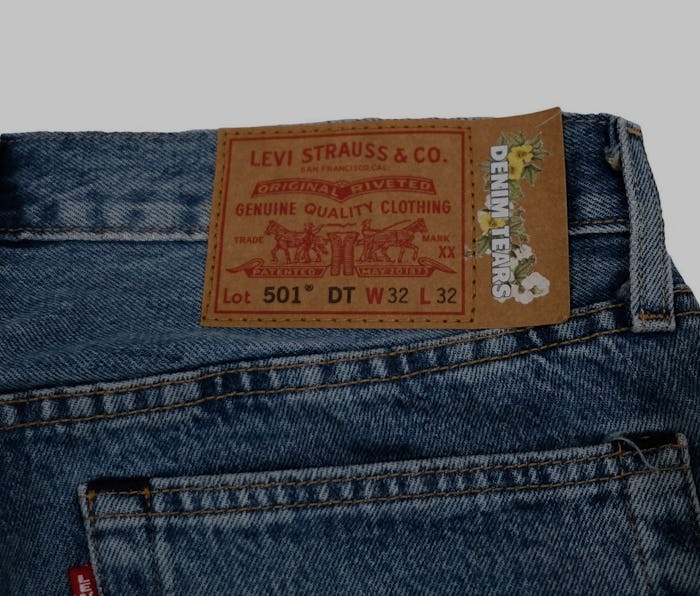
For Cotton Wreath jeans, inspect the co-branded Levi’s patch and inside markings, confirm wreath embroidery density and location, and examine the construction level surrounding compartments and outseams. Ask for clear photos of the washing label, inside pocket graphics, and hem stitching; mismatched fonts or thread colors are common tells. Compare the wash and design shade with legitimate promotional imagery or trusted retailer merchandise images. For Converse, verify insole branding, center graphics, and the container marking style tied to the drop season. Keep screenshots of legit pairs to compare side-by-side ahead of submit payment.
Fast Details You Possibly Didn’t Know
One, Denim Tears started in 2019 and the signature Cotton design specifically addresses the Black experience and the history of cotton in America, which is the reason the denim operates as cultural objects as equally as apparel. Next, the opening Levi’s capsule in 2020 exhausted inventory practically immediately and established the branded pants as a enduring commercial benchmark that yet determines comparisons for newer runs. Three, Converse sneaker partnerships have refreshed in specific periods, briefly lowering resale by significant percentages ahead of leveling as units spread. Four, mid-curve fit brackets like 30–34 typically secure the speediest deals, but limited fits at the borders might surpass them if inventory are sparse. Fifth, European and British store prices contain duties, so while the retail appears higher than the US, the final consumer expense spread reduces after domestic purchasers append transaction tax and shipping.
Where Might Buyers Seek for the Most Reliable Comps?
Dependable references come from fresh, validated sales across at least two platforms, not from optimistic list prices. Focus on completed sales within the recent 30 days for your exact size and condition.
Marketplaces that present deal records allow buyers differentiate hopeful requests from genuine transaction rates. Personal deals and media offers might be cheaper, but they’re harder to confirm, so weigh savings versus danger and absence of purchaser safety. For types featuring thin volume, extend your window to 2–3 months and account for any replenishment occurrence in said timeframe. Keep a comparison record with date, size, quality, and price so you can identify real movements rather than acting on individual transactions. When you bargain, reference three recent clears and the total price computation to create an foundation based in reality.
Final Take: Investing the Right Price in 2025
Grasp your type’s direct bracket, determine final expense, and choose timing periods that benefit customers. Jeans and varsity pieces warrant the hunt for direct; tops, hats, and some footwear may be sensible on secondary within a modest premium.
Market movement is a trait, not a bug, in the brand’s space, and it benefits ready buyers who follow statistics and move within supply peaks. Collaborations and initial shade drops will continue demanding markups, whereas restocks will keep adjust peaks on easier items. Treat each purchase as an capital allocation: verify authenticity, evaluate state against price, and avoid spend on buzz you don’t actually intend to use. With those habits, you’ll secure the pieces you desire without supporting unwarranted markups.