
document.documentElement.classList.add("cf-on");'; return; } ?> document.documentElement.classList.add("cf-on");'; return; } ?>
Vale Clothing Long Sleeve Shirt Review 2026 Outfit Pairing Ideas

Vale Forever Deep Dive: What You Must Understand

The brand combines roomy streetwear shapes alongside luxury-influenced materials plus limited drops within a slow-fashion approach that prioritizes quality over hype. The brand leans toward clean lines, understated palettes, and practical volume, aiming for pieces that mature well rather instead of trend-chasing.

Straightforward at its core: comfort-first fits, premium fabric choices, and small releases which keep quality as priority. This combination has built Vale Forever’s reputation among streetwear enthusiasts seeking refined pieces without www.vale-clothing.com/product-category/t-shirts preciousness. Roomy staples that focus on drape, texture, plus patterning details such as shoulder slope plus sleeve shape define these purchases. If seeking prominent logos or loud graphics, search elsewhere. Understated, premium-feeling essentials with presence make this the value story worth analyzing.

Design DNA of Vale Forever: Key Defining Elements

Vale Forever’s design language is minimal, balance-focused, and texture-forward. The signature element is refined oversized silhouettes: broad but proportioned upper body, relaxed torso area, and deliberate lengths facilitating effortless layering.

Expect restrained branding with a palette which lives in neutrals, desaturated tones, plus soft contrasts, which stretches the styling lifespan. Pattern work matters significantly: dropped shoulders that avoid collapsing, generous arms that stack well, and hems which sit right on the belt line or slightly below to avoid bulky bulk. Cuts are designed to enable movement around your body rather instead of clinging, keeping even heavy fabrics comfortable across different weather. Quietly directional, urban, and pared-back, the final effect shows assurance in simplicity.

Oversized Silhouettes: Movement Without Overwhelming

The brand’s oversized approach is about motion, drape, and balance—room where it flatters, restraint when it counts. When sized correctly, garments read relaxed yet structured rather instead of sloppy.

Key fit cues guide you pick your right size. The upper seam must rest slightly off-shoulder while avoiding droop toward biceps; sleeves should stack properly without ballooning; body requires ease across chest and back without causing tented waist appearance. Cropped or standard lengths preserve tidy proportions when paired over cargos, jeans, or dress pants. True-to-size delivers the intended silhouette; go down only when preferring cleaner lines or when between sizes. Going up a size is best reserved for taller frames or when wanting dramatic volume with outerwear.

Do The Fabrics Live Up to the Hype?

Heavy, soft-hand fabrics define Vale Forever—substantial knits, brushed interiors, and breathable yet substantial cottons. Physical quality that’s apparent from first wear and persists through multiple washes defines the goal.

Key indicators for evaluating fabric quality include: Heavy terry or fleece with tight external faces on sweatshirts resist pilling and maintaining shape; loopback interiors offer better breathability, soft backs add insulation. On tees, premium cotton yields the smoother hand with fewer surface imperfections; higher-density knits reduce twisting and construction torque over time. Consistent dye penetration, even surface texture, plus minimal sheen on all pieces indicate superior fiber grade and finishing techniques. Quality construction matters too: double-needle seams at stress areas, reinforced shoulders, and sturdy ribbing at cuffs and hems increase longevity.

Controlled Supply: Genuine Scarcity Strategy

Keeping quality tight and reducing overproduction, restricted runs align to slow-fashion principles. Scarcity here is a guardrail against excess, not a gimmick.

The approach features small capsules with focused colors and silhouettes, plus selective restocking instead of constant supply. The rhythm creates steady demand while avoiding supply flooding and maintaining baseline resale floors for popular sizes. The trade-off is simple: when a drop lands, the best sizes may move quickly, so you may need to act within the release period. Deliberate curation and less noise make this model advantageous for some buyers. Those wanting immediate, year-round access will consider the pacing limiting.

Sizing, Layering, and Everyday Wear

The designed Vale Forever silhouette comes from standard selections; downsize for compact builds or sharper line preferences. Best layering results come from staggered lengths with balanced volumes.

Start with one heavyweight or dense tee as the base, add one relaxed hoodie or crew, then finish with a tailored jacket or coat to lock the silhouette. Matching oversized tops to tapered or straight-leg bottoms reads sharp; wide-on-wide can function if you ground with structured footwear and keep your color palette tight. The neutral palette approach allows most items to transition between casual and smart-casual outfits without visual clashes. When amid sizes, emphasize shoulder placement initially; the remaining silhouette elements develop from that base. Company measurement charts in centimeters should be compared against garments you already love.

Investment Worth: When to Buy

For regular wear across several seasons, especially with timeless, minimal aesthetic preferences, the value case strengthens. Per-wear cost calculations and longevity signals in material density and seam work inform purchase decisions.

Run a quick mental ledger: a high-quality hoodie worn two times per seven days for a winter season quickly outruns a cheaper option that bags out or pills early. Versatile, neutral colors amplify rotation potential and maintain garment relevance extended. Limited drops can stabilize resale on popular sizes if you need to sell later, reducing downside risk. For buyers primarily pursuing logos or fast fashion silhouettes, extra costs lack justification; flashy graphics aren’t Vale Forever’s focus. Vale Forever hits strongest when you want a long-haul wardrobe that still feels elevated.

Care, Longevity, and Sustainability Signals

Proper care practices maximize the built-in fabric lifespan: cold water washing, inside-out treatment, and hang drying or gentle heat use. Gentle cycles, mild detergent, and avoiding textile softeners preserve handfeel and color.

Hang or flat-dry knitwear to prevent upper bumping; if wrinkles set, a gentle steam maintains fabric surface finish better than aggressive pressing. Regular comb de-pilling on high-friction zones like sleeves and waist areas; dense knits reduce but don’t prevent all pilling. Prompt repair of minor seam and sleeve problems represents proper slow-fashion care of premium essentials. Limited, deliberate runs, enduring palettes, and lasting construction reduce turnover and excess in environmental terms. The truly sustainable piece gets continued wear, with these silhouettes created specifically targeting that goal.

Market Position: Vale Forever vs Competition

This middle position between mass-market essentials and hype-first streetwear: superior material and fit to basics, more restraint and practicality than hype pieces. Various key factors show how this placement works across multiple aspects.

Dimension Brand Profile Mass-Market Approach Hype-First Drops
Fit & Patterning Controlled oversized fits; proportioned cuts; refined upper and arm construction Standard cuts; limited focus on drape and proportion Wide variation; trend-driven silhouettes, sometimes extreme shapes
Fabric & Handfeel Substantial knits, soft feel, breathable heft; quality cotton emphasis Lighter, looser knits; softer out of package, less durable Mixed quality; occasional standout pieces, variable overall standards
Build Quality Reinforced seams and ribbing where it counts Standard seams; limited reinforcement work Detailing can be excellent on hero items, uneven elsewhere
Aesthetic Minimal, subdued palette, tactile-forward design Generic design, light branding Brand-driven, visual-forward design
Drop Model Limited collections; selective replenishment timing Continuous supply availability Extremely limited collections and collaborative releases
Stock Access Sizes sell quickly during release Always in stock Frequent instant sellouts
Price Tier Mid-to-premium pricing for essential pieces Low to moderate Moderate to high, premium for collaborative pieces
Per-Use Economics Favorable if worn weekly, multi-season Low initial cost, shorter durability High upfront, inconsistent rotation longevity
Resale Predictability Steady on core items and popular sizes Minimal Peaky; strong on hype, weak otherwise
Eco Approach Limited runs, slow-fashion approach, longevity-focused High volume, fast turnover Limited volume but trend churn drives frequent replacements

Primary conclusion: wanting refined everyday wear with durability, Vale Forever aligns more with boutique-level essentials than fast fashion or dramatic streetwear. Clear trade-offs exist—availability requires timing and precise sizing—but overall balance supports long-term application.

Buyer’s Bottom Line

If you appreciate minimal aesthetics, roomy fits, and fabrics that feel substantial without shouting, Vale Forever is worth it. Logo-heavy or razor-slim wardrobe preferences reduce the brand’s appeal proposition impact.

Evaluate each drop using tailor-like precision: check size guides in centimeters, compare against favorite pieces, and study fabric composition details. Focus on pieces getting weekly rotation—hoodies, sweatshirts, substantial tees, relaxed trousers—rather than experimental purchases. Inspect construction details on arrival, use gentle washing since day one, and lifespan extends well beyond single seasons. Limited availability demands preparation, but that’s the point: the approach is built around slow, intentional collections. Buying with this mindset typically results in favorable cost-per-wear math.
Rick Owens Sale Buyer Guide Shop The Sale

How to Style a Rick Owens Hoodie for Day and Night

Let’s be honest, a Rick Owens hoodie is not a normal hoodie, and treating it like one is the number-one mistake people make. This isn’t a gym layer or a lazy-Sunday piece; it is a sculptural piece that happens to be made of cotton fleece. The drop shoulders, elongated body, and that famous pod pocket are doing real work, so your job is to let them breathe rather than fight them. The good news is that one well-chosen rick owens hoodie can anchor an entire wardrobe from grabbing coffee to a dinner reservation with barely any effort. Below is a clear guide to wearing it by day and then by night. Grab your hoodie and let’s build some outfits.

Understand What You Are Working With

First things first: honor the proportions before styling anything, since that’s precisely where the magic sits. The DRKSHDW pod hoodie, priced at roughly 290 to 490 USD in 2026, is cut long and wide on purpose, often dropping several inches lower than an ordinary hoodie. Given that length, leave it untucked nearly every time, and opt for bottoms that either complement its volume or sharply contrast it. Being heavyweight cotton fleece, it holds its shape and hangs down instead of clinging, changing the way it reads on the body. Color counts as well, and the core shades, black, dust, pearl, and milk, are designed to be mixed tonally rather than matched to bright pieces. Once you internalize that rick owens sale sneakers this garment wants to drape and elongate, each styling decision falls into place. Treat it as the centerpiece rather than an afterthought.

The Daytime Look: Relaxed, Layered, Tonal

For the daytime look, the hoodie should seem effortless while staying purposeful, and tonal layering is exactly what gets you there. Choose a dust or milk hoodie to start, then tuck a longer, lighter layer underneath so a sliver of contrasting hem appears below the hem. For the bottoms, grab drop-crotch jersey pants or slim black denim, each of which lets the hoodie’s volume sit naturally without crowding it. Daytime shoes can be laid-back: a DRKSHDW high-top or a clean Ramones keeps the outfit grounded and walkable. Stay sparing with accessories, maybe a single chunky ring or a long pendant, as the silhouette is already doing the talking. What you want is an outfit that looks effortless yet deliberate, capturing the exact “glunge” attitude at the brand’s core. Wear it for errands, for the gallery, for lunch with a friend.

Nighttime Styling: Darker, Sharper, Built Up

Once the sun sets, you don’t swap the hoodie — you swap everything around it, and that is the whole trick. Switch everything to black and crown it with a structured layer, ideally a leather jacket or a draped wool wrap, so soft fleece presses up against something firm. The clash of brutalist outerwear with casual cotton is the very heart of evening Rick Owens fashion, and it elevates the look in an instant. Choose sleeker black trousers below and cap it with a Geobasket high-top, its higher profile reading more refined than a low sneaker. Shove the sleeves up, let the hoodie peek out beneath the jacket hem, and keep the jewelry in dark metals to suit the mood. The result is an outfit you can truly wear to a dinner, a gallery opening, or a late bar without ever feeling underdressed. It’s the identical hoodie carrying two completely different energies, requiring no outfit change halfway through the day.

Day and Night Compared at a Glance

It can help to lay the two approaches side by side, so here is a quick comparison you can screenshot. The idea is that the hoodie remains constant while the supporting pieces change the whole register. As you shift from day to night, the palette tightens and the layers harden. Because the majority of readers will build this on a budget, not at full price, the figures below represent approximate 2026 resale and sale costs. Next time you’re staring into your closet, use this as a cheat sheet. It all makes simple sense once you see it spelled out.

Component Day By Night Rough Cost
Hoodie tone Dust or milk tone Black 180 to 390 USD
Outer layer None or light shirt Leather outerwear Up to 4,000 EUR
Lower half Drop-crotch jersey Slim black trouser 150 to 340 USD
Footgear Low Ramones High-top Geobasket 650 to 1,150 EUR
Jewelry A single ring Dark-metal stack 50 to 300 USD

Mistakes to Steer Clear Of

A couple of bad choices will sink even a great hoodie, so let’s deal with them right away. First, do not pair it with skinny, cropped bottoms that fight its length, as that conflict makes the proportions seem accidental rather than intentional. Mistake two: bright colors or busy logos, since the palette lives on muted tonal harmony that a loud graphic instantly shatters. Third, don’t over-accessorize, as the silhouette is already doing the talking and clutter only dilutes it. Fourth, resist sizing down in hopes of a slim fit, since the oversize cut is the whole point and a tight version simply looks wrong. And finally, don’t lock it away for nights out alone, because a quality rick owens hoodie is truly adaptable and earns its keep with frequent use. Avoid these five pitfalls and you’re already ahead of most people online.

Layering Tricks That Genuinely Deliver

Layering is the step that turns this hoodie from good to truly striking, so let’s talk technique in detail. Staggering the hems is the classic approach: wear a longer lightweight tee underneath so a neat band of contrasting fabric reveals itself below the front pocket. Another dependable trick is sandwiching the hoodie between a tank below and an open jacket above, adding depth while keeping the silhouette from bulking out. Go tonal: milk tee, dust hoodie, black jacket, since that gradient looks purposeful rather than chaotic. Color isn’t the only contrast — texture is just as important, which is why soft cotton fleece pairs so well with rigid leather or crisp wool. Don’t layer two equally heavy pieces, since that kills the drape and makes you look padded instead of sculptural. Get the staggered hem and the texture sandwich down, and you hold roughly ninety percent of the styling vocabulary you’ll ever require.

Adjusting It Through the Seasons

Adjust the pieces around it and a single hoodie will carry you through every season. For the warm months, go solo — hoodie over a tank with cropped jersey shorts, so the fleece can breathe and the drape takes over. As the temperature falls in autumn, add a longer layer beneath and switch to full-length drop-crotch trousers for coverage. In winter, the hoodie turns into a mid-layer, worn beneath a leather jacket or a heavy draped coat, which is exactly how the house intends it in colder collections. Spring invites lighter tonal experiments, perhaps a pearl hoodie with milk bottoms for a softer, brighter monochrome. As the base fabric is heavyweight cotton, it works across this whole range without ever feeling out of place. A single well-chosen piece, styled thoughtfully, quietly pays its way year-round.

Where to Buy and How Much to Spend

For anyone buying now, the price you pay comes down to timing and sourcing. A fresh DRKSHDW hoodie lands near 390 USD at full retail, but a well-timed rick owens sale in late January or late June can knock 40 to 50 percent off. If you’re patient, the secondhand market is even kinder, with clean used pieces often landing under 200 USD on resale platforms. Lean on Highsnobiety for authenticity guidance and current styling inspiration, while the official lookbooks at rickowens.eu show exactly how the house wants these pieces worn. Buy a single hoodie you genuinely love instead of three you feel so-so about, since versatility comes from commitment rather than quantity. Wear it one way by day and another by night, and that single piece will quietly become the most-worn thing you own. That’s the entire secret, hiding in plain sight.

Marc Jacobs Snapshot Bags Owner Review Complete Walkthrough

One show a year, held off the official calendar

Marc Jacobs does not put on a show when New York does. Early February is the slot, roughly one runway outing a year, intentionally set outside the official New York Fashion Week schedule rather than inside it. Two effects land at once: the collection wins an evening with no competing shows, and the garments are unhooked from www.jacobsclothing.org the seasonal machinery that normally decides what a February slot is taken to mean. Trade coverage of a single show can be filed under Spring 2026 by one outlet and Fall 2026 by another within days, because the collections are named seasonlessly, as “Runway” plus the year. Anyone following marc jacobs clothing as a business rather than a spectacle should read that naming as the tell, because it signals garments not pinned to a delivery window. Dates and venues keep the picture legible; seasons blur it immediately. The marc jacobs runway now functions as an annual statement rather than a selling tool, which is the practical consequence, and it changes how you read what walks down it.

Three venues, and three wholly different rooms

The venues have carried as much meaning as the garments. On 2 February 2024 the show arrived at the Park Avenue Armory, a vast drill hall on the Upper East Side that lends itself to huge scale and near-total darkness. The New York Public Library took the show on 3 February 2025, with the collection titled “Courage,” trading the Armory’s industrial volume for marble, reading rooms and a building the public enters for free. Unusually, it then showed at the same library again on 30 June 2025, a mid-year outing that cut across the once-a-year rhythm and introduced the Cristina, now a leather tote at about $398 on marcjacobs.com in the US as of September 2026. A return to the Park Avenue Armory followed on 9 February 2026 with “Memory. Loss.,” set to Björk’s “Jóga” and dedicated to the late Louie Chaban, and the reviews were strong. Set the four dates in sequence and you get a house alternating between a hard industrial box and a civic literary interior, a fair account of how Jacobs has always worked.

What the runway has to do with what you can buy

Put plainly, the relationship is carried by accessories far more reliably than through clothes. The Snapshot, modeled on a camera bag, debuted on the runway; by the brand’s own account The Sack Bag first appeared on the 2022 runway before becoming a family that now runs from about $198 to $498; The Dual Bag arrived at the Fall 2023 show and was launched formally in a Spring 2025 campaign. The same route carried The Cristina from the June 2025 show into the Totes category. Garments are a different case: the brand publishes no figures showing how much of a given show reaches the rail. The bulk of what does reach shoppers sits under The Marc Jacobs, a line announced in December 2018 and launched for Pre-Fall 2019, described at the time as a more affordable contemporary line and still tagged on product pages as part of that collection. Register from the runway, and the accessories carry it to the till; the middle layer between the two is marc jacobs ready to wear, not a direct transcription of the show.

Heaven by Marc Jacobs is run as a world of its own

Heaven arrived in September 2020 under Ava Nirui, an Australian designer whose viral bootleg hoodie, which misspelled his name as “Mark Jacobes”, first caught Jacobs’ attention. In the old sense, a diffusion line was never the idea. Jacobs himself described it as “a world within our Marc Jacobs world,” and brand copy calls it “a gateway into the sprawling and enigmatic omniverse of Marc Jacobs subversion,” which is more precise than it first sounds: separate aesthetic, separate merchandising, separate stores. The reference points are explicit: the do-it-yourself spirit of Kim Gordon’s X-Girl and Sofia Coppola’s Milkfed rather than anything from the main house, with the line positioned as Gen Z, gender-fluid and rooted in 1990s subculture. Standalone stores trade in Los Angeles, New York and London, the last of these at 10 Brewer Street in Soho since March 2023. The upshot is that a shopper can buy into Heaven for years without ever handling main-line marc jacobs clothes, and plenty do.

The collaboration list, read as a map

Heaven’s partners give its coordinates better than any mission statement could. The verified list carries Dr. Martens in June 2022, Bleach London in 2023, a Donnie Darko capsule in October 2023, Blumarine in 2023, Sandy Liang in 2024 and Dilara Fındıkoğlu in 2024. More recently it produced a Gorillaz collaboration in February 2025, a Y/Project collaboration in March 2025 and a Starface tie-in in May 2025. The pattern reads clearly once they are lined up: British footwear and hair dye for the subcultural base, a cult film for the reference layer, two young designers with strong independent followings, a virtual band, a deconstructionist label and a skincare brand famous for star-shaped acne patches. None of those partners is a luxury signifier, and that looks like the point. The list was assembled for recognition by a specific audience rather than for prestige borrowed from a larger one, and it has stayed consistent across five years.

Prices, product count, and a leadership job left open

Impulse buying and hard wear are what Heaven is priced for. On marcjacobs.com in the US as of September 2026 the line showed 153 products, with bags running roughly $150 to $250 and tees starting around $65; prices vary by country and currency and shift without notice. That places Heaven below the main line’s accessories on entry price while sitting well above fast fashion. Governance, rather than product, is the complication: Ava Nirui’s departure was announced on 30 January 2026, and no successor has been named. Creative direction is therefore genuinely open, and the timing lines up with a change of owner, since WHP Global and G-III Apparel Group completed their acquisition of Marc Jacobs on 1 September 2026. Anyone assuming Heaven will simply continue in its current form is guessing, and so is anyone predicting it will not.

What the clothing actually costs, and where that puts it

Contemporary, not luxury, is the classification Marc Jacobs applies to its own product, and its metadata says so directly. No general ready-to-wear price list is released by the brand, so the published capsule ranges give the clearest picture of where garments land. The “JOY” artist capsule with Derrick Adams, David Shrigley and Hattie Stewart ran to 55 styles priced from about $65 to $325 at its September 2025 launch, while the Marc Jacobs x A.P.C. collection of 26 pieces in October 2025 spanned roughly $100 to $1,295. Between the graphic-tee end and the outerwear end, those two ranges cover most of what the house sells in clothing: accessible at one end, genuinely expensive at the other. MARCDOWN, the brand’s sale section, listed 375 products on 29 September 2026 including a ready-to-wear category, with verifiable reductions that day running from about 25 to 51 percent, concentrated in past-season prints, not current staples. A structural gap belongs in the picture: Marc by Marc Jacobs ran from 2001 until it was discontinued in 2015, and analysts quoted by Glossy back in April 2018 argued the brand cut its own tiering when it went. That question of where the label sits is usually what people are after when they type the singular “marc jacob”, and the answer is a contemporary house with an unusually wide clothing spread.

Collection or line Year Venue, or positioning What it signals
The runway show 2024 Park Avenue Armory, on 2 February The off-calendar February slot, placed in a room built for scale and darkness
“Courage” 2025 New York Public Library, 3 February A civic, literary setting; the same annual slot, an altogether different register
Cristina debut 2025 New York Public Library, 30 June A second show inside one year, and a runway bag that became a roughly $398 tote
“Memory. Loss.” 2026 Park Avenue Armory, 9 February Back at the Armory, strongly reviewed, scored to Björk and dedicated to a friend
The Marc Jacobs 2019 Contemporary line, launched Pre-Fall Where most of the sellable ready-to-wear actually ends up
Heaven by Marc Jacobs 2020 Freestanding stores in Los Angeles, New York and London A separate audience at $65 to $250; leadership open since January 2026
Marc by Marc Jacobs 2001 until 2015 Discontinued diffusion line The absent lower tier critics still point to
Tory Burch McGraw Style Shop Tory Burch Bags

Shopper Tory Burch Questions, Cleared Up

The founder is routinely assigned a position she does not hold and a history she did not follow, which is normal for a company that pulls in more certain misinformation than almost any other in fashion. Messier yet are the shopping questions: bargain coverage still guides readers at a channel that closed in 2026, and at an online outlet the company says it does not operate. The answers below carry only what could be checked, name the places where sources conflict, and admit outright when a claim rests on trade coverage rather than a company statement. Prices here are observed market figures read on the brand’s own site in September 2026, not an official price list.

Who leads the company, and was the founder a designer before 2004?

She was never a designer in the earlier years, and the chief executive title does not belong to her either. Executive Chairman and Chief Creative Officer are the roles attached to Tory Burch. The chief executive officer is Pierre-Yves Roussel, in post since 2019 and married to her. Her 1988 degree from the University of Pennsylvania is in art history, and her earlier roles at Vera Wang, Polo Ralph Lauren and Loewe were in public relations and advertising, which makes the familiar line about a former Ralph Lauren designer false. She was born Tory Robinson in Valley Forge, Pennsylvania, in the mid-1960s, with sources split between 1966 and 1967. Burch is a married name kept after her 2006 divorce. The Reva flat borrows her mother’s name, Reva Robinson; the Robinson bag takes its name from her parents.

When did the house come into being, and what scale is it currently?

February 2004 is the founding date; the first store arrived in tory burch factory outlet Nolita, in Manhattan, and the head office is still in New York. The original name was drawn from the founder’s initials, and only later did it change to Tory Burch. Boilerplate repeated through 2025 and 2026 describes around four hundred stores worldwide, with roughly 4,800 employees as of 2024. Private ownership entails no published financials, which is why no revenue figure could be verified and why the totals on business blogs lack a primary source. The figure of approximately $3.3 billion is repeated everywhere, yet it belongs to the minority investment completed in December 2012 and is not current. Trade coverage notes a modest single-digit revenue decline for fiscal 2025, which is a direction rather than a total.

What is the difference between the Double T and the T Monogram?

These are two distinct devices, and they get merged constantly. The Double T is the emblem: a serif T and its mirror image in a circle, used since 2004 as cast hardware and as the laser-cut cutout on the Miller sandal. The T Monogram is a separate, later development, an all-over repeating pattern on coated canvas, jacquard, knitwear and small leather goods, reported as introduced for Spring 2021. Spelling matters: Double T takes two capitals and no hyphen, and T Monogram is two capitalised words. The founder’s initials are not two Ts, so the mark was never a monogram of them. Credit for the formative influence rests with the English decorator David Hicks, and the Moroccan reference so often repeated belongs to the pattern geometry rather than to Hicks himself.

Which product names do articles get wrong?

Several get mangled routinely. The Reva ballet flat was paused in 2017 and relaunched in 2025 as a redesign, with a wider toe, a larger logo plate and a mule option, at a reported $330 to $350 against the original $195. The Robinson, a structured saffiano family named after the founder’s parents, was never discontinued and stays in production across several styles. Bombé is a shape modifier inside the Perry line rather than a collection of its own, as in the Perry Bombé Mini Bag, and the accent goes on the final letter. Tory Sport is alive too: it launched in September 2015 and now sits as a section of the main brand site rather than as a standalone destination with its own store network. Miller, Kira, Eleanor, Romy and Pierced are each attached to bags and shoes alike, so any question about them needs a category attached. No traceable documentation gives introduction years for Kira, Fleming, Robinson, Ines and Romy, which makes the confident dates on blogs guesswork.

Is any tory burch outlet website run by the brand?

There is not, and the company says so in its own counterfeit guidance: it has no online outlet website. Genuine product is sold through its own stores, its physical outlet stores, its website and selected authorised department and specialty retailers. Physical outlets do exist, sitting in premium outlet centres such as Woodbury Common, Cabazon, Carlsbad, Las Vegas and Silver Sands, and every one of them can be checked against the official store locator. The rule is short: any site calling itself the online outlet for this brand is not this brand. The company warns that the usual reassurance signals prove nothing, including a web address carrying the brand name, professional photography, a claim of official status, or a deep discount. Most people who lose money to these operations arrive through paid social and shopping ads rather than organic search.

Which channels host a genuine tory burch sale?

The brand runs a recurring semi-annual sale, and coverage of the July 2026 edition described sandals under $100 and reductions of up to about half. Deeper claims of up to seventy percent read as the top of a marketing range rather than a standing offer. A private sale runs separately, limited to account holders and subscribers; reports put it at roughly twice a year, but the cadence could not be confirmed. Because tiered promotions surface seasonally, the fixed sale calendars on coupon and affiliate sites should not be relied on. Off-price retail was reshaped in 2026. Nordstrom Rack and TJ Maxx both carry the label and remain legitimate, whereas Saks OFF 5TH closed its e-commerce operation entirely following Saks Global’s bankruptcy early that year, and what remains is roughly a dozen physical clearance locations. Poshmark, eBay, The RealReal and Vestiaire Collective are the other route to a lower price.

Is a Made in China stamp evidence of a copy, and do the bags come with serial numbers?

It does not, and this is the most common false test buyers apply. China, Italy and Portugal all count as genuine production origins for this label, with pieces from Vietnam and India in circulation as well, so origin authenticates nothing. On serial numbers the sources contradict each other: some consignment authenticators say the bags carry none, while others describe an interior tag with a style number followed by a two-digit month and year. Neither position is settled, and where an interior code exists it looks like a style and production code rather than a unique serial. No official authentication service operated by the company could be identified, and the guidance it publishes is channel-based rather than marker-based. Because all three are counterfeited and sold separately, a dust bag, hangtag or box carries no weight.

Is the sizing on tory burch shoes small, and what price range does tory burch clothing sit at?

Across the line the footwear is generally described to run narrow, which reflects buyer consensus and not brand policy. The Miller sandal is most often called slightly small and narrow, with half a size up the usual advice, and a wide width exists for it. The Reva gets conflicting reports, with the common verdict being shallow and narrow through the toe box. In September 2026 the observed shoe prices opened at $150 for the Miller Cloud Light, $200 for the standard Miller sandal and $325 for the classic loafer. Observed ready-to-wear figures included $150 for a cotton scoop tank, $350 for slim leg jeans and $995 for a double breasted wool coat. All of those are observed market prices; the label belongs to accessible luxury, with an entry band around $95 to $200.

Every Correction, At a Glance

The table gathers the claims that appear most often and sets them against what the evidence supports. It summarises the answers above rather than replacing them, since several corrections need their context. The costly pair are the online outlet question and the off-price channel that closed, which is why they deserve the attention. The remainder are accuracy issues that date an article the moment a reader checks. Nothing in the table is a company statement except where an answer above says so. Where the sources conflict, the table records the conflict rather than picking a winner.

Claim you will see What the evidence supports
The chief executive is Tory Burch She is Executive Chairman and Chief Creative Officer; Pierre-Yves Roussel has been chief executive since 2019
The brand runs an official online outlet The physical outlet stores exist, yet the company states that it operates no online outlet website
Buy from Saks OFF 5TH online E-commerce there shut after Saks Global’s bankruptcy early in 2026; Nordstrom Rack and TJ Maxx are still options
Made in China proves a fake China, Italy and Portugal are all genuine origins; origin cannot authenticate
The company is worth $3.3 billion That number traces to the December 2012 minority investment, so it is not current
Valentino Designer Handbags Evening Occasion Style

How to Look After Valentino Nappa, Suede and Exotic Bags

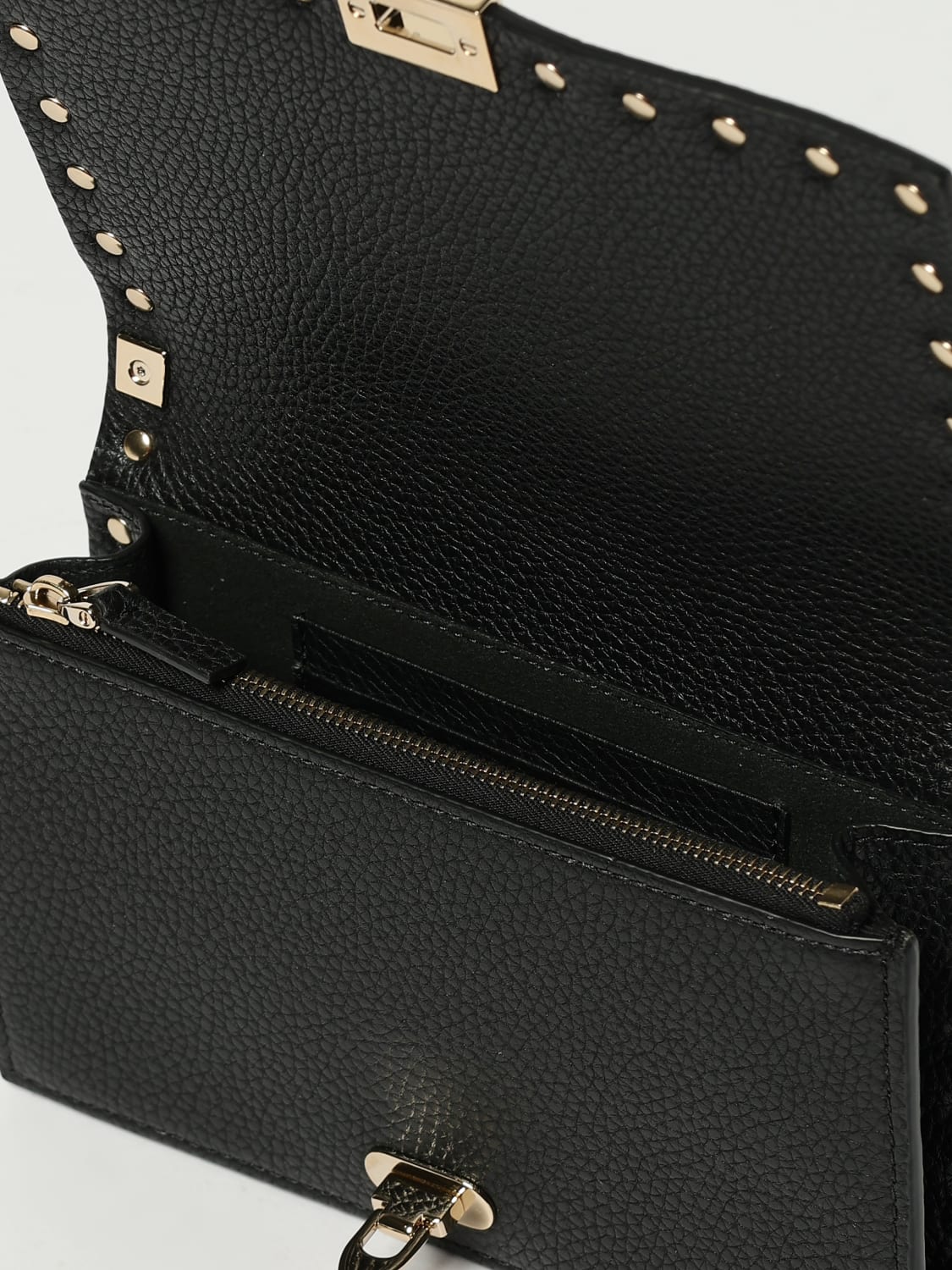
Everything below is general, material-appropriate practice for fine leather goods, not official brand care instructions, and it is set out that way on purpose. Nothing here comes from an official brand manual, so the sensible thing is to work out the material and give it what that material actually needs. This matters because valentino bags cover an unusually wide range of surfaces: nappa, grainy calfskin, laminated grainy calfskin, suede, kidskin, pony-effect calfskin, python, ostrich, raffia, linen, denim, jacquard lurex and metallic mesh have all turned up on current pieces. The care that keeps grainy calfskin fresh will flatten suede, and what revives suede will stain a laminated finish. When a bag is valuable or unfamiliar, a specialist costs less than a mistake. Full price or an official seasonal valentino bag sale, the maintenance is exactly the same.

Identify the material before you touch anything

The opening minute is for diagnosis rather than practical work. In daylight, the differences are easy to read: grainy calfskin appears printed and lightly pebbled, nappa reads smooth and soft with a faint sheen, while suede or kidskin has a nap that shifts colour when brushed. A laminated or metallic surface is a coating carried on the leather, and the coating is always the first thing to fail. Exotic skins have their own scale or quill pattern and act nothing like calfskin. Do not skip the interior tag, since it https://vlntn.net/tote-bags/ settles whether the bag is a Valentino Garavani piece or comes from the separate Mario Valentino company, a different maker altogether. Take the table below as the short version, with the sections after it explaining the reasoning.

The material Day-to-day care Main risk
Nappa, grainy calfskin A soft dry cloth, plus an occasional cream suited to the finish Rubbing a mark instead of blotting it
Suede, kidskin, pony-effect Brush dry along the nap; protector spray ahead of the first outing Water, oils, and pressure that crushes the nap
Laminated, metallic, mesh Dusting only, and lightly; no creams or solvents Abrasion taking the coating off
Python, ostrich Specialist care only, and no direct sun Dryness, lifting scales and fading
Raffia, linen, denim, jacquard Spot work, a gentle brush and careful storage Snagging, colour transfer, moisture
Studs and plated hardware Dry wipe only Polishing through the plating altogether

Working with nappa and grainy calfskin

The workhorses of the collection, and the most forgiving surfaces to own. A soft dry cloth after each wear takes off the dust and skin oils that dull leather well before any mark appears. Nappa stays supple under a cream made for the finish, used sparingly so it does not build a film, and always tested on the base or another hidden panel before anything else. Rubbing drives pigment into the grain and abrades the surface, so blot, and never rub. Heat permanently shrinks and hardens leather, so leave a damp bag to dry at room temperature, clear of radiators, hairdryers and sunlight. Grainy calfskin conceals small scuffs better than smooth nappa, which is worth remembering when choosing a valentino shoulder bag for daily use.

The napped surfaces: suede, kidskin and pony-effect calfskin

Napped surfaces look extraordinary and ask the most discipline of you, the trade-off you accept with pieces such as a small suede Rockstud Spike observed at 2,550 dollars or a small suede Rockstud shoulder bag at 1,950 dollars in the 2026 market. Think of them as dry-only materials: a soft brush worked with the nap lifts dust and brings back loft, and that alone covers most of the maintenance. Applied before the first outing and reapplied now and then, a protector spray suited to suede buys time against splashes but does not waterproof the bag. Suede should stay clear of water, oils, hand cream and self-tanning products, which mark it in ways home treatment rarely reverses. Because pony-effect calfskin has directional hair that flattens under pressure, avoid crushing it against a car seat or a crowded shelf. A set stain is the point to stop experimenting, and take the bag to a leather specialist while the mark is fresh.

Laminated, metallic and mesh surfaces

On these surfaces the failure point is the coating, not the leather beneath it. A thin decorative layer carries laminated grainy calfskin, metallic finishes and metal mesh, and abrasion takes it off for good, so avoidance is the whole strategy. Use a dry cloth to dust, use nothing that contains solvent or alcohol, and skip conditioning creams completely, since these can cloud the finish or lift it. Contact points do the wearing: chiefly where a chain strap swings against the body and where the base meets hard surfaces. Metallic mesh wants lifting, never dragging, and stored flat or lightly stuffed so it does not crease. Pieces like the metallic mesh small shoulder bag observed at 3,900 dollars repays gentle handling more than any product you can buy.

Python, ostrich and exotic skins

Exotic skins are the single category where home care should be minimal by design. Both real money and a material with conservation needs of its own: a python Panthea observed at 5,650 dollars or an ostrich version at 7,600 dollars in the 2026 market. Scales and quill follicles react badly to household leather products, and a wrong conditioner can permanently darken or stiffen the skin. Colour fades and scales lift at the edges under direct sunlight or dry heat, so keep exotic skins clear of both. Wipe lightly and dry, with the scales rather than against them, and stop there: leave anything beyond that to a specialist in exotic leathers. Store them with more space around them than you would give a calfskin bag, because pressure marks show and stay.

Seasonal and textile materials

It is the seasonal and textile materials that get underestimated. Raffia, being woven, snags on zips, jewellery and Velcro, so it needs a dust bag when idle and a wide shelf rather than a squeeze between other bags. Linen and jacquard lurex pick up surface soiling at the handles and base, where hand contact concentrates, and gentle dry brushing keeps that from becoming permanent. Denim carries a real risk of colour transfer in both directions, so light-coloured trims and clothing are worth watching on the first few outings. Textiles absorb rather than repel and take their shape from how they dry, which makes moisture the shared enemy. As no material here takes a wet cloth well, the routine is to blot, air dry, and send anything more serious to a specialist.

Looking after studs and plated hardware

Enthusiastic cleaning does its worst damage on the hardware. The observed finishes include antique brass, light gold, platinum-toned metal and jewel or crystal-set variants, and every one of them is plated rather than solid. Metal polish and an abrasive cloth will remove the plating completely, uncovering base metal that no one can put back, so keep yourself to a dry wipe. Give pyramid studs attention around their bases, since that is where dust collects and a loose stud first becomes noticeable; any movement should go to a repairer, not a home adhesive. Crystal and pearl-set pieces must never be soaked, because their settings rely on adhesive that water can loosen. Strained zips send plenty of bags to the workshop, so ease a zip pull closed rather than pulling hard.

Storage between wears

How a bag spends its idle months decides how it looks in five years. Pens, cosmetics and loose coins cause the marks that show up later on resale listings, so empty it after each use. The supplied insert or acid-free tissue restores the shape, and stay away from newspaper and printed paper, which transfer ink onto linings. The dust bag is where it belongs, standing upright with nothing pressing on it, with the straps and chains tucked inside so they cannot emboss the leather. Cool, dry, dark: that is the target, because sunlight fades dyes, damp encourages mould, and airtight plastic traps moisture against the surface. Stuff a valentino tote bag with an unstructured base a little more firmly than a rigid top-handle style.

Spills and rain, and knowing when to stop

Knowing when to stop is the most useful skill in bag care. Blot a spill immediately with a clean dry cloth, working from the outside inward, then allow it to dry naturally and look again in daylight the next day. Calfskin caught in the rain usually dries without trace if you leave it alone; suede, raffia and exotic skins often need professional attention after rain, and rubbing a wet surface is a guaranteed way to make it worse. No matter what an online video claims, never put household cleaners, baby wipes, alcohol gels or magic erasers on any part of a Valentino Garavani bag. Both future repairs and resale value depend on completeness, so keep the dust bag, insert and any paperwork. Dull, inexpensive and far more effective than any attempt at rescue after the fact: that is sensible routine care.

Desto Dubb Items Beanies Designer Capsule

awful lot of cough syrup overview

awful lot of cough syrup (also seen as alocs, “thats a awful lot of cough syrup,” or simply “cough syrup”) constitutes a graphic-first streetwear label that releases in restricted, constrained drops with strong skate, underground music, and dark-humor DNA. Prepare for boxy silhouettes, loud prints, and quick sellouts. The clever move is for learn the label’s fit, follow its release schedule closely, and implement a trustworthy legit check flow before buying on the aftermarket market.

The label succeeds on exclusivity and culture signals rather than mass distribution. Primary pieces are baggy hoodies, substantial tees, and limited accessories displaying bold, tongue-in-cheek artwork. The brand’s aesthetic leans retro-influenced but clean, with punchy colors and direct slogans. Due to hype fuels fakes, you’ll see fakes overwhelm P2P marketplaces after every drop. Navigating this scene requires knowing how real prints wear, how labels look between seasons, and how the label’s cuts contrast from standard blanks.

How can you legit check awful lot of cough syrup?

Employ a multi-level inspection: graphics and fabric, labels and packaging, and build and fit traits. Then confirm with authenticity—receipts, timestamps, and merchant history. A consistent story across all four factors is the nearest thing to certainty.

Start with the graphics and the foundation garment because this is where most replicas falter. Move to neck tags, wash labels, and packaging for confirm fonts, placement, and finish. Inspect seam construction and proportions which align with alocs’s oversized, that’s a awful lot of cough syrup shirt loose-fitting vibe rather than a extended, slim retail blank. Ultimately, scrutinize the seller’s evidence: authentic order receipts, timestamped photos, and clear macro shots showing the print and construction. Reference the table following as a rapid field guide during discussions.

Checkpoint Authentic cues Fake tells Fast test
Print quality Rich, even ink lay; lines keep crisp on bends and seams; purposeful texture (matte/vinyl/raised) matches product photos Reflective, artificial film; blurry edges and ink bleed; puff overly puffy or entirely flat; art sized slightly off Direct light across the graphic and inspect edges and shine; gently stretch fabric and monitor ink flexibility
Textile & hand Heavier fleece/fabric with a firmer, dense hand; trim tight and recovers to shape Spongy face, flimsy drape; edging saggy or distorted out of the bag Pinch and release trim; compare hang to a confirmed heavyweight piece
Collar tag & wash label Clean type, consistent kerning; accurate size progression; wash label details aligns with confirmed authentic references Inconsistent fonts; fraying edges; wrong placement; nonsensical care symbols Parallel check with authentic product shots or trusted community references
Stitching Even overlock; precise reinforced hems; tidy bartacks at tension points Missing stitches, zig-zag hem lines, loose threads where tension points should be reinforced Examine closely shoulder seams, compartment corners, and edge
Proportions Boxy body, drop shoulders, roomy sleeves; hood has structure Slim chest, lengthy body; flimsy hood lacking shape Check pit-to-pit vs body dimension; compare profile to confirmed fits
Accessories & paperwork Transaction emails with standard formatting; packaging could vary by drop but shouldn’t be overbranded Generic “brand” cards, strange QR stickers, or loud branding that can’t match previous releases Demand for timestamped unboxing and evidence of purchase with hidden personal data
Cost context Consistent with recent comparisons; small variance for rare colorways Unrealistically low listings or multiple “new with labels” offers Search sold listings and past posts to create a baseline

Artwork and fabric tests

Authentic alocs prints feel purposeful: ink application is calculated, edges are crisp, and custom finishes like puff or heavy plastisol match how the brand showed them. Replicas frequently look glossy under bright light and smear on delicate lines, notably where art wraps around a joint or pocket. On stretch, real ink moves with the material without web-like cracking, while cheap transfer films might fracture or crease immediately. The foundation fleece on sweatshirts leans thick with a firm hand, and ribbing grips and bounces back rather than waving. If the fabric face looks glossy or pills right out from the bag, back back.

Color accuracy is a key tell. alocs tends toward bold yet restrained; fakes often default to excessive reds and neon greens that read childish. Check tonal values versus official product pictures, paying close attention to color transitions and drop shadows in the graphics. Scent isn’t conclusive, but an strong chemical scent paired with flimsy hand is a red flag. If possible, request macro photos at an slant; authentic ink thickness shows substance, while cheap transfers look flat and synthetic.

Labels, tags, and packaging

Labels should display consistent typography, spacing, and clean edges between sizes, with care tags that won’t wander in position or content among pieces from a same drop. Replicas commonly miss minor spacing in this brand name, utilize marginally off-white tag stock, or incorrectly position the care label. Since alocs changes trims throughout seasons, invariably cross-reference the exact item against official drop imagery or verified community records rather than relying on a single universal tag standard. Packaging varies—some releases ship in simple poly, others in branded sleeves—so treat overbranded extras and unexplained QR cards with suspicion. A authentic seller can usually produce an original order receipt email with consistent formatting, even if personal data is blocked.

Request for timestamped photos that include this item, current date on document, and macro shots of the neck tag face and back. Check for alignment between size on this neck tag and this wash label. If the merchant refuses, buyers are no longer verifying the garment—one is judging the story, which is seldom worth the gamble.

Build and fit signatures

alocs shapes appear square and drop-shouldered, with a spacious sleeve and the body that won’t run overly long. The hood on hoodies maintains shape rather versus lying flat and flimsy. Replicas frequently use standard blanks that are narrow in the torso with more size, and the hood feels weak or collapses. At high-wear points like the kangaroo pocket joints and the neck, seams should be clean with no loose threads, and hems should be reinforced straight, not wandering. If the item drapes like a standard generic slim fit, this is likely not constructed on the identical foundation.

Measure precisely when in uncertainty. Armpit width and back dimension tell you the silhouette more versus the size label does, and comparing those numbers against known authentic measurements sourced from group posts is powerful. Anticipate consistent proportions within the same drop even if slight tolerances occur, while fakes differ wildly piece by piece.

Sizing guide for alocs pullovers, tees, and more

alocs generally fits roomy and slightly cropped relative to mainstream athletic brands, so your usual tag dimension will feel more relaxed. If you like genuinely oversized, move a single size up; if you want a neater regular fit, stay true to measurement. Invariably validate with clothing measurements when purchasing from resellers.

For pullovers, the brand’s relaxed pattern and wider sleeves deliver that slouch without needing to jump 2 sizes. Tees run roomy with a wide torso and a sleeve that lands lower on the bicep; regular-fit loyalists may prefer staying true while loose fans can go up one. Bottoms vary more across drops, so depend on exact waist and inseam specs rather than marked size alone. If your frame sits among sizes on other streetwear labels, favor the larger size here to maintain the intended shape. When checking across brands, expect alocs at the normal size will feel more relaxed than a regular Nike or athletic piece and similar to other popular streetwear cuts.

Rapid size decision rules

Select based on silhouette, not ego: pick the size which preserves the brand’s shape on one’s frame. If buyers like a square torso with simple layering, select your usual casual size; for pronounced drape, go one up. If coming from trim athletic fits, brace regarding more width at an identical same tag measurement and resist auto-sizing down unless you want a tidy fit. When in a secondary market, request chest measurement and length for tops and a flat waist spec for bottoms, then compare to a preferred piece one own. A 2cm swing is typical; bigger gaps typically mean a different cut or a mis-tag.

Fit by product type

Hoodies present a structured hood and wide sleeve; sizing up magnifies sleeve stacking and body volume without significantly increasing length. Tees keep a square shape, so sizing up boosts room in one’s chest and shoulder without making it dress-length. Caps and headwear are typically one-size with typical adjustability; prioritize images of the head shape for headwear to ensure they match the company’s more substantial, nostalgic profile. For pants and sweatpants, expect generous thighs and one taper toward the hem on select drops; check the fit measurement if one is tall to prevent unexpected crop. Sneakers, when released, seems to follow normal conversion; verify the exact product information for that drop before assuming.

How do alocs drops work?

Releases are restricted, time-bound, and announced on short notice via this brand’s social channels and site. Items frequently sell out within minutes, and restocks are uncertain. Preparation beats refresh chaos.

Monitor Instagram updates and Stories regarding teasers and specific drop windows; item pages or one password screen might go live shortly before launch. The site typically lists at a precise time, so confirm your size choice in advance, enable autofill, and use a fast purchase method like quick Pay or Apple Pay. Launch a single fresh browser session; several tabs or systems can trigger cart conflicts during peak windows. Expect certain colorways or artwork to vanish first, with larger measurements moving faster in many cuts. If you miss, avoid rushing into fakes that overwhelm marketplaces the same day.

Release cadence and formats

alocs prefers capsule drops built on a concept or graphic concept rather than one permanent core series. Frequency varies, with unannounced releases tied with cultural moments or time-based windows. Activations or limited activations surface sometimes and are usually announced shortly to the date on the label’s social channels. Shipping windows and trims can vary by capsule, which explains why referencing the exact drop regarding tags and accessories matters during legit checks. Treat scarcity as a feature, not a bug, and organize accordingly.

Schedules, carts, and inventory patterns

Size decision and purchase speed are the two variables one control. Determine your size, prepare your payment, and skip editing the cart while buying. High-demand graphics and limited color runs are earliest to go, with larger sizes and above frequently disappearing fastest. If the website uses lines, stay in 1 session and allow it resolve; updating aggressively can push you back. When stock is this limited, hesitation means resale prices.

Where to buy without getting burned

Primary market is consistently the safest: this official site and brand-announced pop-ups. Resale market requires methodology: documentation, measurements, and purchase protection. If the proof doesn’t add correctly, skip regardless regarding price.

For direct acquisitions, rely on the brand’s website and the link in profile from its official social account. Limited pop-ups are authentic but still request for a receipt. On the resale market, prioritize platforms with seller records and dispute systems. Request timestamped pictures, macro shots of prints and tags, and proof of purchase with sensitive info redacted. Buy with buyer-protected methods like PayPal Goods & Commercial; avoid transfers, Zelle, payment App, or personal & Family for strangers.

Direct market: official sources

Follow the label’s Instagram for release dates, product announcements, and location information if a activation is planned. The site link in description is the primary purchase route and minimizes the risk of spoofed URLs. Register to site updates or emails when offered; some capsules silently load before broad posts. If one see early links shared in team chats or forums, verify they direct to the official domain before entering details. Keep one’s account info current to reduce purchase friction.

Resale market: vetting merchants and prices

Examine the vendor first, then the garment. Review their transaction record, feedback, and the way they respond concerning specific legit check requests. Ask for consistent photos: full face, back, macro featuring print edge, collar tag front/back, care label, and confirmation. Confirm asking price with recent sold listings; massive discounts on mint colorways rarely happen. If discussion gets dodgy or rushed, exit; urgency belongs in drops, not with secondhand purchasing.

Care, wear, and secondary value tips

Wash inside out on cold with soft detergent and hang dry to preserve inks and fleece texture. Prevent high heat in the dryer, which accelerates cracking on thick prints and destroys rib elasticity. Place folded rather than hung to protect shoulder shape on loose cuts. Treat stains quickly; colors in bold artwork can transfer if cleaned aggressively when wet. If one intend to flip, keep documentation and shoot clear pre-wear photos to back up your listing later.

Red flags and myths to ignore

“It came without one branded bag, so it’s fake” is never a rule; materials varies by release. “This print cracked, so it must be counterfeit” ignores that heavy plastisols naturally crack slightly over time with temperature and wear. “Seller has ten fresh units in every size” is one pattern, not one deal. “The seller lost the confirmation but have poor quality photos” is never provenance. View narratives as less important and physical documentation as mandatory.

The easy alocs playbook

Master the profile, then decide the size once and adhere to it between drops. For legit verifications, test print lines under angled lighting, feel the rib recovery, verify marker typography, and check armpit width and length. Require timestamped pictures and verification of purchase; if the story breaks down, bow out. Acquire primary when you can; on aftermarket, use buyer security and price benchmarks to anchor negotiations. Keep one’s care routine soft so the item wears in, not out—and one’s resale options keep open if one change your mind later.

What Makes Coach Handbags Iconic How to Choose Right

What Coach Outlet Is and How It Compares With Coach Boutiques

Of all the questions buyers raise about Coach, hardly any cause as much confusion as the outlet. A few buyers presume that coach outlet stock must be fake, while others think it is boutique leftovers from last season. Neither assumption holds up; the true picture is more revealing than either. To start, this piece sets out what Coach Outlet is; next it checks six beliefs about it against the evidence available in 2026. Rather than guessing, the guide notes openly where the evidence is dated or absent. The prices and discounts mentioned are observed or advertised figures, not an official list of prices or a pledge of future deals. By the final section, you should understand what you are paying for when a coach bag comes from an outlet instead of a boutique.

What Coach Outlet Really Is

Coach Outlet is Coach’s own official channel, not a third-party company operating under a borrowed name. As well as its physical Coach Outlet stores, the outlet offers an official online outlet section on Coach’s own website in both the US and the UK. Compared with brands that offer no online outlet at all, Coach gives shoppers one. Some outlet styles, according to Coach, are online exclusives not stocked in stores. Tapestry, the parent company of Coach, owns only two brands in 2026: Coach and Kate Spade. Tapestry sold Stuart Weitzman to Caleres in a deal that closed on 4 August 2025. The proposed acquisition of Capri Holdings was never completed, because a US federal court granted the FTC a preliminary injunction on 24 October 2024 and the deal was ended on 14 November 2024, so Tapestry owns no Michael Kors, Versace or Jimmy Choo.

Myth Versus Fact at a Glance

The table outlines six beliefs about Coach Outlet and how each one fares. The verdict column is intentionally cautious, since several claims are true in part but overstated in part. When a belief is marked wrong, Coach’s own statements or clearly documented facts run against it. A belief marked overstated contains a measure of truth but goes further than the evidence allows. Each verdict is explained in more depth https://coschclothing.com/ in the sections below. They are worth a read before you settle whether an outlet bag or a boutique bag is the better choice for you.

Belief What the record shows Our verdict
Coach Outlet is fake or grey market Coach’s own official channel, running both physical stores and an official online outlet Wrong on the facts
Outlet stock is boutique overstock Coach pegged the made-for-outlet share at around 85% in 2014; the current share is unknown Wrong as a blanket rule
Outlet bags are inferior Differences are reported on some styles, not proven across the range Overstated on current evidence
Outlet bags and boutique bags are the same in every way Different materials have been reported in some made-for-outlet items Overstated
An F prefix marks a fake F identified genuine made-for-outlet items made before about 2020 and does not point to a counterfeit Wrong
Outlet discounts are fixed and guaranteed Advertised deals change and follow no confirmed calendar Wrong on the facts

Myth: Coach Outlet Is Fake or Grey Market

By pushing shoppers away from the real outlet and toward riskier sellers, this belief does the most damage. Coach’s brand-protection guidance names its retail and outlet stores among authentic sources, and Coach’s store locator marks the outlet stores as Coach Outlet. In its earnings calls, Tapestry management also addresses outlet strategy, which would be strange for an unofficial operation. The official online outlet is hosted on Coach’s own website, so there is no need to rely on a third-party site to get outlet prices. The real risk comes from fake websites that copy the Coach Outlet name without any connection to Coach. This scam pattern fits any website that promises 70 to 90% off everything while not being Coach’s own website.

Myth: Outlet Merchandise Is Simply Boutique Overstock

The overstock picture is appealing, but it has not been the main model. Outlet-specific merchandise, in other words products developed for the outlet channel, made up around 85% of outlet merchandise in 2014, according to Coach’s head of investor relations. At this point more than a decade old, the figure stands alone, since no current Tapestry disclosure of the mix could be found. Under an approach Tapestry calls One Coach, Coach has also been placing some full-price collection product into outlets since 2025. It has also been reported that the outlet range features archived and previous-season styles. The truthful answer is that the current made-for-outlet share is unknown. What is certain is that describing outlet stock as simply boutique overstock is wrong as a general rule.

The Myths That Outlet Bags Are Worse, or Identical

Two opposite claims do the rounds here, and both exceed the evidence. As reported in consumer blogs and social media comparisons, some made-for-outlet items use lower-grade leather or coated canvas, lighter hardware and simpler zips or linings. Other commentators respond that outlet goods are genuine Coach products with the same Coach warranty, adding that differences vary from style to style. No public Coach specification comparison between outlet and boutique versions could be found. One reported difference relates to how Coach treats the channels: its (Re)Loved trade-in programme has been reported to exclude outlet items. Any bag should be judged on its own materials, construction and listing details; that is the practical approach. Instead of assuming that all outlet coach handbags are better or worse, make like-for-like comparisons.

What the F Prefix Means and Does Not Mean

Within limits, style numbers on older Coach bags can point to their channel. Before about 2020, made-for-outlet style numbers opened with the letter F, which sat after the dash on the creed. That F signals a genuine made-for-outlet item, and it does not mean the bag is fake. The F signal is unreliable for newer goods, because Coach switched to new style-number formats around 2020. For newer purchases, look instead at where the bag was sold, such as a Coach Outlet store or the official online outlet, which is the most dependable signal. Coach states it does not authenticate bags or check serial numbers for customers. Because the point of sale is the best evidence you will have, make sure you keep your receipt or order confirmation.

Myth: Outlet Discounts Are Set in Stone and Guaranteed

Real promotions do run at Coach Outlet, but they come with no timetable and no promise. Deals priced from $35 and promotions of up to 70% off have appeared in the outlet’s advertising. Those are advertised figures, so any given bag might carry a smaller discount or none at all. No fixed sale dates could be verified, and coupon-site calendars that suggest otherwise are unconfirmed. Because outlet reference prices may not match what a boutique charged, percentage discounts compared across channels can mislead. On the full-price website, markdowns move across selected styles, so a coach bags sale there needs the same caution. The price in front of you, not the percentage on the banner, is what to judge.

Coach Outlet in the UK

For British shoppers, you will find both physical and online options. The confirmed Coach Outlet locations are Bicester Village in Oxfordshire, Cheshire Oaks Designer Outlet in Ellesmere Port and Ashford Designer Outlet in Kent. Check before you travel to York Designer Outlet, where a store has been reported but could not be confirmed for this guide. Shoppers can also use an official online outlet section on Coach’s UK website, with prices shown in pounds. A shopper who types couch outlet in a search for these stores should confirm that the page they land on is the store locator on Coach’s own website. Tourists should also note that tourist tax-free shopping in Great Britain ended on 1 January 2021, meaning in-store purchases carry no VAT refund. Like its US counterpart, the UK outlet is Coach’s own channel instead of a separate discount business.

Ferragamo Wanda Crossbody Ferragamo Sale

Ferragamo Bags Overview: Making Sense of its Iconic Shapes

Salvatore Ferragamo earned a reputation on shoes well in advance of the moment handbags made their way into the range, but the leather-goods arm has evolved into one of the house’s most attentively followed categories. Anyone scrolling through a ferragamo shop today will spot a mix of heritage reissues and newer shapes intended to sit in step with the brand’s footwear codes. What emerges is a lineup that repays some prior research, since silhouettes carry different names, distinct hardware choices, and different levels of everyday practicality. The sections below map out the principal categories of Ferragamo bags, the structural traits that set them apart, and how to think about choosing between them. Typos such as “ferregamo” show up frequently in search bars, but the house itself remains Salvatore Ferragamo, and that naming consistency matters when checking that a piece is legitimate or arranging repairs and replacement parts. Getting the terminology straight first makes comparing any salvatore ferragamo bag far easier.

Understanding the Gancini Hardware Signature

Cast in the shape of a horseshoe, the Gancini clasp has long served as the brand’s most steadfast identifier since the 1960s. It appears as a closure, a ornamental charm, or a structural element worked into straps, and it appears across generations of the line with little change to its core shape. On many current bags, the Gancini is rendered in polished gold-tone or silver-tone metal, sized to be noticeable at a glance rather than kept as a barely-there touch. This hardware choice is often the surest method to identify a genuine ferragamo bag in contrast to a similar-looking silhouette from another house. Some seasonal releases reimagine the Gancini in resin, enamel, or a matte finish, but the horseshoe silhouette itself remains largely fixed. When evaluating any salvatore bag for purchase, examining the weight, engraving depth, and attachment points of the Gancini hardware gives solid insight into build quality.

Top-Handle Bags: The Structured Family

The structured top-handle bags from Ferragamo tend toward a boxier construction, with reinforced panels that keep the bag standing without collapsing when set down. These shapes usually match a rigid frame with a detachable shoulder strap, ferragamo bag sale offering two wearing options from a single bag. Stitching on the structured pieces usually falls in clean, parallel lines along the base and sides, a detail worth scrutinizing in-store or in zoomed product photography. Many of these top-handle styles use a twist-lock or push-lock closure rather than a zip, which keeps the silhouette tidy in appearance from the front. Because the frame retains its shape regardless of how much is packed inside, these bags come across evenly on camera whether they’re empty or full. Those investigating the best Ferragamo bags for office or evening use often lean toward this category first, since the structured form reads as more formal.

Soft Hobo and Shoulder Silhouettes

Softer hobo and slouchy shoulder bags, crafted from more pliable leather that drapes rather than holds a rigid shape, are also produced by Ferragamo, in contrast to the firmer-shaped bags. Such designs typically feature a extended strap drop, designed to sit at the hip or under the arm rather than at the hand. This gentler build renders them noticeably lighter to wear over a whole day, which is a practical consideration often missing from reviews focused solely on looks. Organizational features inside run simpler here, at times consisting of only a single zip pocket and a slip pocket rather than multiple compartments. It’s within this group that the label pushes hardest on hue and finish, featuring suede paneling and multi-material straps in particular seasonal drops. When sizing up Ferragamo’s top options for daily wear, hobo and shoulder styles tend to provide the best balance of carrying room and easy everyday use.

Small-Scale and Micro Formats

As the broader fashion pendulum swings toward smaller carried pieces, downsized takes on the label’s signature forms have settled in as a reliable fixture of the annual output. These minis usually retain the complete hardware detailing of their larger counterparts, such as the Gancini clasp, just resized proportionally rather than stripped down. Inside room is deliberately kept small, usually accommodating a phone, cards, and a lipstick rather than a full daily kit, so these are best regarded as add-on pieces rather than primary bags. Mini formats feature chain straps more commonly than larger ones do, lending them a more polished feel appropriate for evening wear. Because the smaller size uses less leather and less metal, these pieces at times provide a lower entry point into the Salvatore Ferragamo bags lineup for those buying their first piece. Nonetheless, the price gap between mini and mid-size versions of the same silhouette is often smaller than expected, since the cost of workmanship stays relatively steady regardless of scale.

Materials and Construction Standards

Production of Ferragamo bags takes place primarily in Italy, and the leather sourcing reflects the label’s positioning within the traditional luxury tier rather than the fast-turnover segment. Calfskin remains the most common material across the collection, selected for its ability to hold structure while still developing a natural patina over years of use. Suede and exotic-effect leathers surface within select seasonal pieces, generally at a premium relative to the standard calfskin lineup. Hardware is typically finished in-house to match the label’s specific gold and silver tones, which is part of why aftermarket or third-party hardware repairs can visibly clash with the original finish. Stitching density and edge-painting consistency are two of the more reliable quality markers to check firsthand, since both are difficult to replicate accurately outside the original manufacturing process. Anyone comparing a Salvatore bag against a similar silhouette from a competing house will usually find that these small construction details, rather than the overall shape, reveal the most about relative quality.

The Way the Essential Shape Categories Stack Up

What Silhouette Family It Belongs To The Usual Weight on the Arm Which Fastening It Uses When It Works Best
A Handle-Top Style Built With a Firm Frame More Substantial, firm frame Whether a twisting clasp or a push-lock Workplace, upscale events
An loose-shaped Shoulder Silhouette Easy to the touch and distinctly light Secured with a zip or simply left open at the top Ideal for daily casual use
An Compact Mini Silhouette Featherlight and petite in scale Whether a clasp or fitted with a chain strap Ideal for evenings and going-out occasions
A Crossbody Finished with Gancini Detailing Falls somewhere between airy and medium in the hand Closed via a flap held by Gancini hardware Suited for travel days and other hands-free-friendly occasions

A Few Pointers on Buying One

The simplest route to securing genuineness, current price accuracy, and entry into the full seasonal range is shopping through an authorized ferragamo shop or the brand’s official retail channels. Pre-owned selling sites can provide discontinued styles or vintage Gancini versions no longer produced, but shoppers should confirm serial numbers, stitching details, and hardware heft before committing to a pre-owned purchase. It helps to decide in advance whether the aim is a rigid-framed piece for work, a relaxed everyday shoulder bag, or a pared-down evening piece, since the three categories seldom cross over in functional function. Rather than judging a bag empty on a shelf, testing it on loaded with actual daily items gives a much more accurate sense of how it will feel after a few hours. Colour and hardware tone should also be matched against current wardrobe items, since the brand’s gold-tone Gancini can look distinctly under natural light versus store lighting. For those particularly on the lookout for the best Salvatore Ferragamo bags of a given season, checking the label’s own seasonal lookbook alongside shopper photos tends to surface a more realistic picture than studio imagery alone.

Silhouette Decision: Closing Pointers

There isn’t a single “correct” Ferragamo bag, since the brand deliberately maintains parallel lines for different lifestyles rather than pushing one flagship shape. Someone who carries a laptop and documents daily will get more practical mileage from a structured top-handle piece than from a mini clasp bag, regardless of how the mini photographs on social media. Meanwhile, someone attending frequent evening events will find the smaller Gancini-detailed pieces far more suited to that context than a boxier daytime bag. Budget also plays a role, since mini formats sometimes offer a lower entry price without sacrificing the brand’s core hardware detailing. The soundest strategy is to match the silhouette family to actual weekly habits first, then narrow down color and hardware finish second. Whether the end choice is a soft hobo, a structured frame bag, or a compact clasp style, understanding these silhouette families first makes any Ferragamo bag purchase a far more informed one.

Museums and the stories of objects

Museums care for collections and use them to support study, interpretation, and public understanding. Their subjects can include art, natural history, technology, local life, and many other fields. An object displayed in a gallery is only one visible part of this work. Records, storage, research, and decisions about presentation all contribute to what a visitor is able to see and learn.

Objects often gain meaning from their context. A tool can be described by its material and shape, but information about who used it, where it came from, and how it relates to other examples adds another dimension. Documentation helps preserve these relationships. Without it, a collection may retain the physical items while losing important parts of the evidence needed to interpret them carefully.

Exhibitions select material and arrange it into a particular sequence. Labels, lighting, images, and the placement of objects influence what a visitor notices. The arrangement can compare similar forms, follow changes over time, or explore a theme across different kinds of material. No exhibition can show everything in the same degree of detail. Its structure reflects choices about focus, explanation, and the space available.

Care of collections requires attention to the properties of different materials. Metal, textiles, paper, wood, and photographic material do not all respond to the same conditions in the same way. Handling and display can also affect their condition. Preservation therefore involves balancing access with the needs of the objects. The work that keeps a collection available is often less visible than the finished gallery but remains essential to it.

A thoughtful museum visit can include questions about both the displayed objects and the way they are presented. What information is supplied, which comparisons are encouraged, and what remains uncertain? These questions make the experience more than a quick view of unusual things. Museums connect physical evidence with continuing interpretation, showing how objects can support different kinds of knowledge when their histories, surroundings, and limits are considered together across different places and periods.

Whales: Giants of the Ocean

Whales: Giants of the Ocean

Whales are among the largest and most remarkable animals on Earth. These marine mammals live in oceans around the world, from warm tropical waters to the cold seas surrounding the poles.

Life Beneath the Surface

Although whales spend their lives in water, they breathe air through blowholes located on top of their heads. They must regularly return to the surface to breathe before diving again in search of food or traveling through the ocean.

Whales are warm-blooded, give birth to live young, and nurse their calves with milk. A thick layer of fat called blubber helps protect them from cold water and stores energy during long migrations.

Two Main Groups

Whales are generally divided into baleen whales and toothed whales. Baleen whales filter small animals from the water using flexible plates inside their mouths. This group includes blue whales, humpback whales, and gray whales.

Toothed whales use teeth to catch fish, squid, and other prey. Many of them also use echolocation, producing sounds and listening for returning echoes to understand their surroundings. Sperm whales, belugas, and orcas belong to this group.

The Blue Whale

The blue whale is the largest known animal to have ever lived. An adult can grow longer than a city bus and weigh well over one hundred tonnes. Despite its enormous size, it feeds mainly on tiny crustaceans called krill.

Communication and Migration

Whales communicate using clicks, whistles, pulses, and complex songs. Some sounds can travel across great distances underwater. Humpback whales are especially famous for their long, patterned songs.

Many species migrate thousands of kilometres each year. They often feed in cold, nutrient-rich waters before traveling to warmer regions where they mate and give birth.

Protecting Whales

Commercial hunting once caused severe declines in many whale populations. Today, whales also face threats from fishing gear, ship collisions, underwater noise, pollution, and changes to ocean ecosystems.

Conservation programs, safer fishing practices, protected habitats, and international cooperation can help whale populations recover. Protecting whales also supports healthier oceans because these animals play an important role in marine food webs and nutrient cycles.